
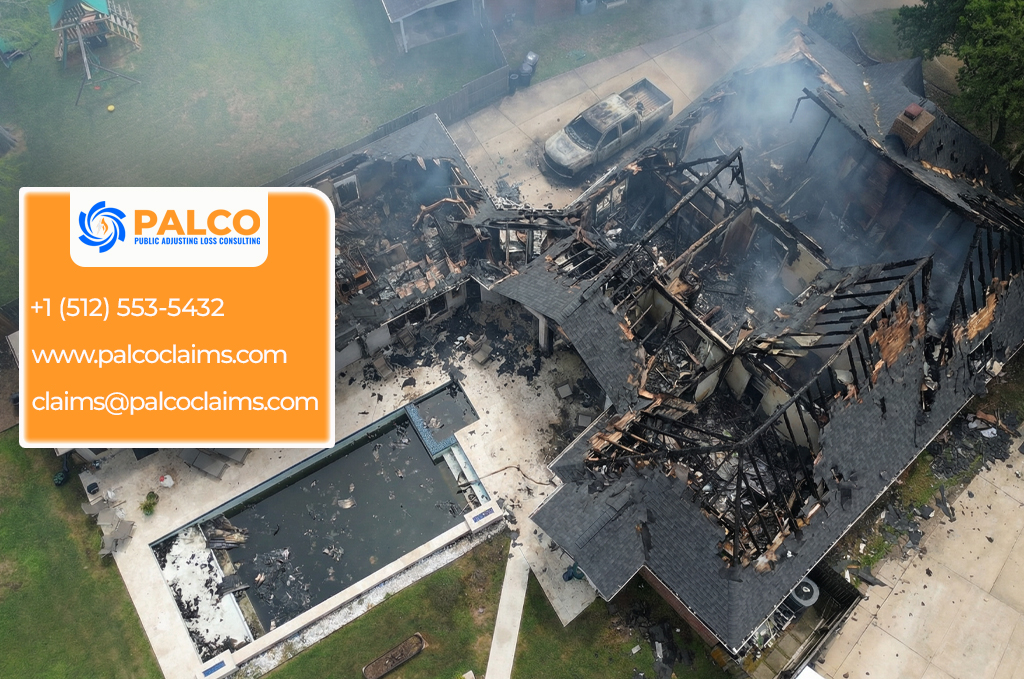
The Challenge Homeowners Face After a Fire
A house fire disrupts life instantly destroying personal belongings, damaging structural components, contaminating air with smoke and soot, and leaving families displaced. But after the flames are gone, a second challenge begins: navigating the complex fire damage insurance claim process.
This process determines whether your home will be restored fully or whether you end up paying thousands of dollars out-of-pocket.
Most homeowners assume their insurance company will automatically pay fairly. In reality, the insurer’s goal is to limit financial exposure. Your goal is to recover every dollar required to rebuild. The difference between the two often comes down to understanding your rights, documenting evidence correctly, and following the proper fire claim steps.
This detailed guide breaks down the entire insurance fire process, from the first hours after the fire to final reconstruction, while also linking to authoritative PALCO Claims articles for deeper insight.
Related Articles:
1. What Is a Fire Damage Insurance Claim?
A fire damage insurance claim is a formal request to your insurer asking for compensation to repair structural damage, replace personal belongings, remediate smoke and soot, and cover temporary relocation expenses. Fire claims are complex because fire rarely acts alone heat, smoke, soot, and firefighting water all cause multi-layered damage that must be documented.
Most insurers overlook or undervalue:
- Hidden smoke infiltration
- Attic and roof deck heat damage
- Structural warping
- Electrical wiring deterioration
- Water damage behind walls
- HVAC contamination
Proper documentation and professional evaluation are essential to ensure everything is included in your settlement.
Inline reference example: Many homeowners misunderstand the basics until they read foundational guides like What Is a Public Adjuster?.
Related Articles:
2. Immediate Actions After a Fire
The hours immediately following a fire are critical. Every decision you make affects compensation later.
Ensure safety before entering
Firefighters must clear the site before re-entry. Structural collapse, live electrical hazards, and toxic smoke may remain long after flames are out.
Do not move or clean anything
Cleaning too early destroys essential evidence needed for the claim.
Notify your insurer
Report the incident, obtain your claim number, and avoid making speculative statements.
Contact a professional fire adjuster
A public adjuster protects your interests not the insurer’s. Reading Why You Need a Public Adjuster in San Antonio, Texas gives context to why early involvement matters.
Related Articles:
- Hire a Trusted Public Adjuster in Houston, Texas
- Why You Need a Public Adjuster in New Braunfels, Texas for Insurance Claims
3. Documentation: The Most Important Step in the Insurance Fire Process
Documentation sets the foundation for the entire claim. Claims are frequently underpaid simply because homeowners fail to document damage thoroughly.
Photograph and film everything
Capture:
- Burned materials
- Smoke and soot staining
- Water-damaged areas
- Cracked walls and distorted frames
- Melted wiring
- Attic and roof structure
- All personal items affected
Create a detailed inventory
List each item with description, age, condition, and replacement cost.
Maintain backups
Store digital files in multiple locations.
Schedule an independent inspection
Public adjusters use advanced tools like moisture meters and thermal imaging insurers rarely do.
For step-by-step instructions on capturing evidence, read:
How to Document Fire Damage for Insurance
If the insurer disputes your documentation, consider appraisal:
The Secrets of Insurance Appraisals
Related Articles:
- Don’t Ignore Water Damaged Light and Fire Risks
- What Homeowners Need to Know About Roof Damage and Insurance Claims
4. Understanding Your Insurance Policy
Your insurance policy determines how much money you receive yet most homeowners never read it in detail.
Key coverage areas
Dwelling Coverage
Covers the structure of the home: roof, walls, electrical, plumbing, drywall, insulation, flooring.
Personal Property Coverage
Covers household belongings.
Additional Living Expenses (ALE)
Pays for hotels, rental homes, food, laundry, storage, and transportation while your home is being repaired.
Liability Coverage
Protects you from third-party claims during or after the fire.
ACV vs. RCV
- ACV (Actual Cash Value) subtracts depreciation
- RCV (Replacement Cost Value) pays full replacement
For a detailed explanation of policy interpretation, refer to:
How to Become a Public Insurance Adjuster
Related Articles:
5. Step-by-Step Fire Damage Claim Process
Below is the complete process broken down clearly:
Step 1: Notify the insurer
Provide date, location, and initial details.
Step 2: Hire a public adjuster immediately
They prevent mistakes that weaken your claim.
Learn more: How to File an Insurance Claim with a Public Adjuster
Step 3: Document all structural and personal property damage
Follow Section 3 closely.
Step 4: Get multiple repair estimates
Licensed contractors will provide detailed scopes.
Step 5: Review insurer estimates carefully
Insurer estimates often minimize structural damage.
Step 6: Negotiate
If the insurer undervalues your loss, you must challenge their estimate.
See: Maximize Fire Claim Payout Tips
Step 7: Begin restoration
Ensure payments are properly scheduled.
Related Articles:
6. Why Fire Damage Claims Are Often Underpaid
1. Cleaning before documentation
Insurance companies dispute undocumented losses.
2. Relying on insurer adjusters
They work for the insurer not for you.
3. Hidden damage goes unnoticed
Smoke inside walls, electrical heat damage, attic scorching, and moisture absorption often go unreported unless a fire adjuster inspects the home.
4. Accepting the first offer
Initial offers are almost always low.
Inline reference:
Many underpaid claims follow the same patterns discussed in
Fire Damage Claim Maximum Payout.
Related Articles:
7. Methods to Maximize Your Fire Damage Insurance Claim
Homeowners can significantly improve claim results by:
- Hiring a public adjuster before talking extensively to insurers
- Documenting structural and personal losses thoroughly
- Getting several contractor bids
- Requesting reinspection if needed
- Using the appraisal clause when appropriate
- Tracking all ALE expenses
- Identifying long-term smoke, odor, and electrical risks
For negotiation insights:
Maximize Fire Claim Payout Tips
Related Articles:
8. Homeowners’ Legal Rights During a Fire Damage Claim
You have the legal right to:
- Request reinspection
- Demand a complete explanation of all valuation discrepancies
- Challenge denied items
- Hire representation at any stage
- Seek appraisal for disputed claims
- Receive ALE reimbursement
To understand how adjusters advocate for homeowners, read:
Why You Need a Public Adjuster in New Braunfels, Texas
Related Articles:
9. Fire Damage Claim Timeline
|
Claim Type |
Approx. Duration |
|
Minor fire |
30–45 days |
|
Moderate structural damage |
60–90 days |
|
Major structural loss |
6–18 months |
|
Disputed escalation |
12–24+ months |
These timelines parallel those seen in major storm events discussed here:
Recent Storm Strikes South Texas
Related Articles:
10. Restoration and Rebuilding: What Happens After Settlement
Once the insurer approves your fire damage insurance claim, the restoration team begins:
- Structural safety assessment
- Removal of burned materials
- Cleaning of soot, smoke, and odor
- Moisture extraction and mold prevention
- Electrical and mechanical replacement
- Roof, wall, and flooring reconstruction
- Final inspections and clearance
Commercial and large-loss fire cases often require specialized planning. Learn more at:
Loss Consulting Services
11. Preventing Future Fire Damage
Homeowners can reduce future risk by:
- Installing smoke alarms in all key areas
- Maintaining HVAC and electrical systems
- Avoiding overloaded outlets
- Storing flammable materials properly
- Practicing evacuation plans regularly
For electrical hazard awareness, read:
Don’t Ignore Water Damaged Light and Fire Risks
12. Frequently Asked Questions
1. Can I file a fire claim without help?
Yes, but payouts are often significantly lower.
How to File an Insurance Claim with a Public Adjuster
2. Should I hire an adjuster early?
Early involvement prevents mistakes.
Why You Need a Public Adjuster in San Antonio, Texas
3. Should I clean before taking pictures?
No. This destroys vital evidence.
How to Document Fire Damage for Insurance
4. Can weather-related issues lead to fire?
Yes. Storm damage often creates electrical hazards.
Yesterday Hail Damage in Sanger TX
Conclusion
A house fire may last minutes, but the fire damage insurance claim that follows can affect your recovery for years. Underpayment happens when homeowners assume the insurer will automatically act in their best interest. True recovery requires strong documentation, a clear understanding of policy coverage, professional representation, and persistent negotiation.
PALCO Claims provides homeowners with expert support, deep inspection accuracy, and proven methods to maximize settlements. Their experience in fire, smoke, and water loss ensures homeowners receive the compensation necessary to rebuild fully and confidently.
To begin your claim recovery journey, visit:
Fire Damage Claim Process Guide
For expert claim assistance:
Contact PALCO Claims